
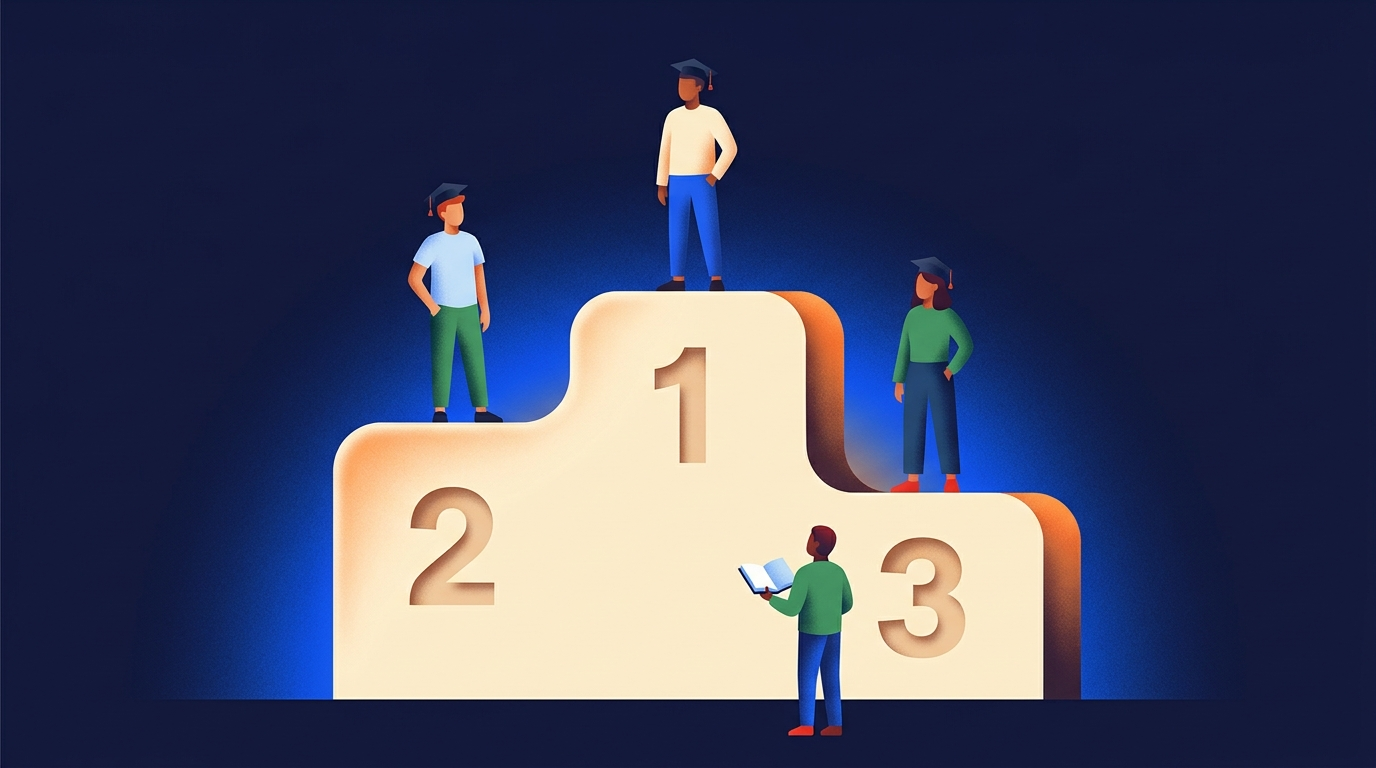
Your Method Is the Best? Show Us Your Students.
Spend enough time on trading Twitter and you’ll eventually discover that almost every method works, provided you ask the person selling it.
Ask someone else and you’ll hear that the same method is complete nonsense.
Then the replies arrive. Someone posts a chart. Someone else posts a different chart. Two communities spend the afternoon explaining why the other one doesn’t understand the market, and the person who was originally trying to learn something is now considerably more confused than when they started.
We’re not particularly interested in settling those arguments. Different traders can make different approaches work, and there are useful disagreements to be had about why.
But when the people arguing are also selling mentorships, there is another question we think deserves more attention.
What happened to their students?
If someone has spent years teaching a method they describe as exceptional, you would hope there are people somewhere who have become good at using it. People who can make their own decisions, manage the difficult periods and produce results worth looking at.
We’d quite like to know who those people are.
Being Good at Trading Is Only Part of It
The obvious place to start with a mentor is their own trading. That’s reasonable. If somebody is going to teach you how to do something, you probably want some confidence that they understand it themselves.
But that only gets you so far.
A trader can be excellent at what they do and surprisingly bad at explaining it. Years of experience get compressed into a decision that feels obvious to them. The student gets a few lines on a chart and an explanation that makes sense once the trade has already worked.
Then tomorrow arrives, the chart looks slightly different and the student has no idea what to do.
Teaching involves working through that gap. Understanding what the student missed, explaining the decision properly and helping them recognise the situation themselves next time.
Eventually, some of that should become visible in the student’s trading.
Otherwise, what exactly has been passed on?
When the Mentor Goes Offline
This is also where we think mentorship can lose its way.
A Discord group might start with lessons, chart reviews and an intention to help people learn. Over time, though, the thing everyone pays attention to can become the next trade announcement.
The mentor posts an entry. Students follow. Another message tells them to move their stops. Someone asks whether they should still be holding. Everyone waits for the answer.
The group might have a profitable day. The students might be delighted.
But imagine the mentor doesn’t turn up tomorrow.
Would those students know how to prepare for the session? Could they explain what they were looking for, why a trade made sense and what would invalidate it? Would they be comfortable deciding there was nothing worth doing?
Or would they spend the morning refreshing Discord?
Watching an experienced trader make decisions can be useful. There is plenty to learn from seeing someone handle uncertainty while the market is moving. But you would hope the students gradually take on more of that thinking themselves.
If everything still depends on the next message months later, it’s fair to ask whether the mentorship has become a signals service.
People can choose to pay for trade calls. That’s their decision. But someone buying an education should understand whether they’re learning to trade or paying for continued access to somebody who does.
A mentor ought to be proud when a student no longer needs to ask them about every position.
That would seem like a fairly good outcome.
Your Best Student Is a Starting Point
Of course, plenty of mentors already show student results.
A student gets funded. Someone receives a payout. A message appears saying the course finally helped everything make sense. Those things can be real, and they can matter enormously to the person involved.
We just don’t think the conversation should end there.
Was that student already trading well before they joined? How long have they been learning? Have they developed their own approach, or are they following the same calls as everyone else in the room?
And how many people went through the programme?
One impressive trader out of twenty students and one impressive trader out of several thousand give you rather different reasons to be impressed.
What would get our attention is seeing several students from the same mentor doing well over a meaningful period. Watching them remain competitive after a difficult month. Seeing other students emerge later and begin building records of their own.
At that point, there is a much better reason to take an interest in the teaching.
It still wouldn’t establish that every concept in the course is correct, or that everyone who buys it will succeed. But it would give the mentor’s argument some substance beyond their ability to explain why another educator is wrong.
This Is Where Prop League Becomes Interesting
One of the things we want Prop League to make easier is discovering the people behind good trading.
That includes the traders themselves. It can also include the people who helped them improve.
The
is built around public mentor profiles, verified relationships with traders and visibility linked to performance.
The interesting part is what that could allow someone to discover.
Say you’re following a season and keep noticing traders who learned from the same mentor. They have different accounts and their own careers, but several are putting together results worth paying attention to.
Perhaps you’ve never heard of the person who taught them.
You probably want to now.
Or perhaps you already know the mentor. You’ve watched their videos, read their posts and considered joining their programme. Being able to follow the verified performance of traders associated with them would give you something much more useful to examine alongside the sales page.
You could see how those traders perform over time and where they stand among people who learned elsewhere.
The record won’t tell you everything. A good league position cannot establish whether someone took a trade independently or followed a message. You still need to understand the relationship and how the trader works.
But there would at least be a body of performance to discuss. That makes it possible to ask much better questions.
We think this could be particularly useful for a good mentor who isn’t especially visible online. Someone might spend years helping traders improve without becoming a recognisable name outside their own community.
If their students keep performing, that work should have a chance to be noticed.
The Students Still Deserve the Credit
There is a limit to how much anyone should read into this.
Students arrive with different levels of experience. Some have studied with several people. Some adapt what they learn until their trading barely resembles the original lessons. Others make huge progress simply by becoming less erratic, long before they get anywhere near the top of a league.
A mentor cannot control every decision a student makes. And an educator who mainly works with beginners may be doing excellent work without immediately producing a collection of top-ranked traders.
We would want that context to remain part of the discussion.
The student also has to do the work. They sit through the losing periods, make the decisions and live with the results. A mentor having contributed to someone’s development doesn’t make that person’s career theirs to claim.
But none of this makes student performance irrelevant.
If you’ve been selling the idea that you train exceptional traders for years, people should be able to ask where some of them are.
Especially if you spend a reasonable amount of those years criticising everyone else’s teaching.
Something Better for Good Mentors to Compete Over
We’d quite like to see communities get behind their students over the course of a season.
A mentor follows someone they’ve worked with, watches them climb and gets to be proud of how far they’ve come. People start paying attention to an unfamiliar educator because several of their students are doing well. Traders from different schools compete, and perhaps it turns out there is more than one sensible way to approach a market.
That would be a useful development.
Good teaching takes patience. It involves reviewing mistakes that keep returning and finding another explanation when the first three haven’t helped. Much of it makes fairly unremarkable social media content.
But over time, it should leave something behind in the people who received it.
That’s what we’d like Prop League to help make visible.
Mentors will still disagree about methods. Their communities will still have opinions. We doubt a league table is going to make trading Twitter suddenly polite.
It might, however, give the next argument a more interesting place to start.
Your method is the best?
Which of your students should we be watching this season?
The inaugural season kicks off
Join the waitlist to become a founding league trader — and be first to know the moment the doors open.